
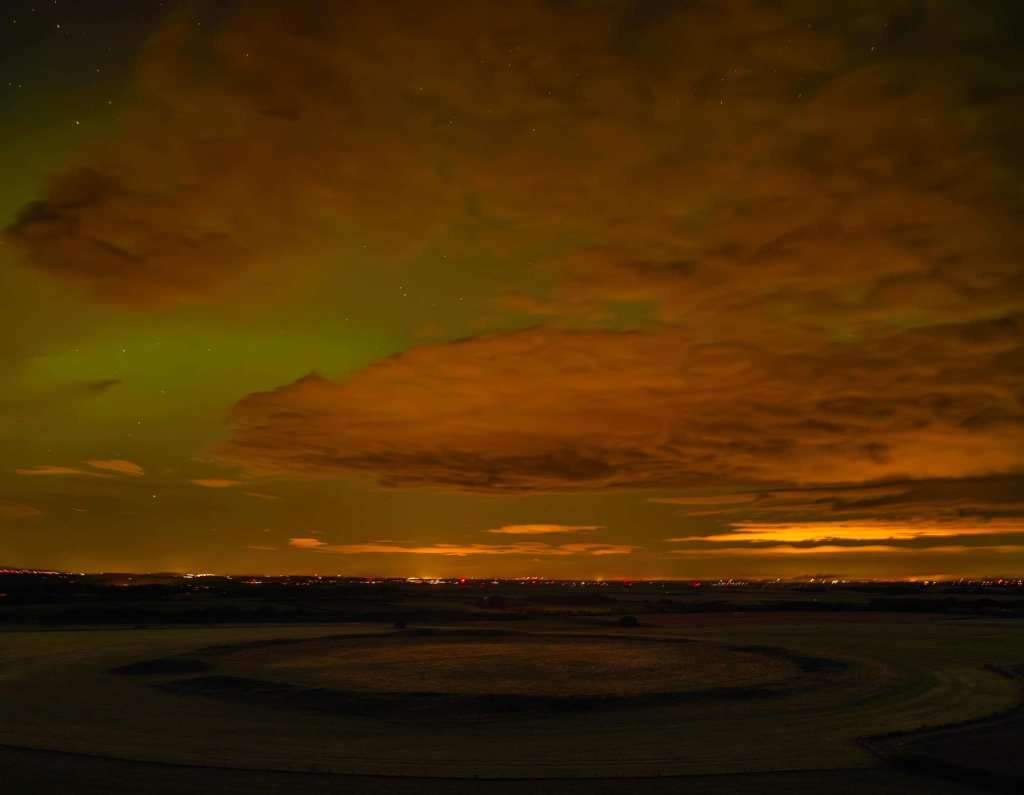
Early autumn. As the nights begin to draw in, as the equinox passes and the light wanes earlier each day, this is the time when the long shadow of the coming winter is felt in early morning chills across the land. We mourn the dying of the summer with feasts and festivals, shamelessly stolen from our ancient ancestors. We call them Harvest Home, All Hallows Eve and, later, as the winter starts to bite, Candlemass, Christmas and Hogmanay. But they are all deeply rooted in the ancient winter-fearing traditions of our prehistoric forebears.
What we are really doing is echoing the old ways; we are performing rites deeply embedded in our psych, and like ancient trackways over distant forbidding moors, we walk our spiritual roads towards the dying of the year.
There was a time when this would be a season of sacrifice, of thanksgiving for the harvest, of the people’s pleas for a mild winter, for the wolf to stay in the forest, for the snow to stay on the hills, for life to return to the fields and for the summers warmth to return. The people begged the Gods for the health of the family, of the tribe, for survival itself.
We don’t know what these autumn celebrations looked like in the neolithic period. The prayers and the rites of these, our long dead ancestors, are a mystery to us: they lived 180 generations ago: a chain of people looking back through the Medieval period, past the Normans, the Saxons, the Romans, back beyond the Age of Iron, before the advent of Bronze and Copper. Back to the origin of our social structure, back to the beginnings of agriculture and religion: back to the very start of society itself. But what we do know is that these people celebrated astronomical events that we still recognise today.
They recorded these events in the simple alignment of their monuments: they faced the rising and the setting sun on the equinoxes and, in the centre points of each year, they recorded the solstices too.
But in the early autumn, as the summer fades, when the crops are safely gathered in, they would have seen the most striking of the astronomical events: the Auora Borealis – the Northern Lights.
We modern humans stare in wonder and awe at the beauty of the aurora, even though we understand their origin and cause. But what would our ancient, uneducated ancestors have made of them? Would they have have seen them as fires in the sky? Or as mystical fantastic beasts, constructed of pure light, magical and mythical? Or perhaps they have seen them as a visitation of the Gods themselves, as ethereal spirits, dancing and twisting above the ancient sacred places.
Perhaps the northern lights are the origin of the stories of dragons, the sight of this swirling kaleidoscope of colours floating in the darkening sky above a churning sea twisted into tales of fire-breathing beasts, harbingers of death and destruction.
Whatever they saw, or thought they saw, they would have looked on in wonder and fear, as we do today, and woven tales and legends around the swirling phantoms in the dark northern skies, from where the freezing winter winds blow, from where the sun goes to die, from where the snows and gales of relentless winter originate. Death came from the North, and so the lights are the vengeance of the Gods themselves.
Perhaps this is the reason they built their great temples, the henges, and the barrows. Perhaps these places, with their predominately north – south entranceways, are designed to watch the northern lights, placed so that the people can see the ethereal dancing Gods in the clear cold skies of autumn.
Today we look at the Northern Lights and see the satellites of Starlink, the global internet service, slowly float overhead, daisy chaining the mysteries of the night sky into new constellations, new mysteries, and we realise that as the old Gods are forgotten we, modern man, have created our own stars and in our arrogance we have redrawn the heavens, and we have become Gods ourselves.
And what would the ancient Gods themselves see if they visited their old temples today? They would flicker swirl and dance for their supplicants far below, but in our ignorance we would leave the henges and the hilltop temples dark: no torches would be lit, no feast fires would burn and no dancers would weave through the writhing, drifting smoke. No prayers and pleas would be shouted above the crackle and flare of the flames. The ancient spirits would see nothing but darkness and neglect where they once saw great temples of soil and stone, teeming with crowds of awestruck worshippers and they would know that mankind has finally forgotten them, that the old ways are lost, and so they would dance alone in the deep black sky, until the creeping dawn banishes them to their cold lonely northern homes once again.
Image is the Northern Lights over Thornborough Central Henge Nov 2023.
 YAA Mapping & A M Hunt 2023
 Thornborough Archaeology Group